
Children’s Emergency Department at University Hospitals of North Midlands NHS Trust
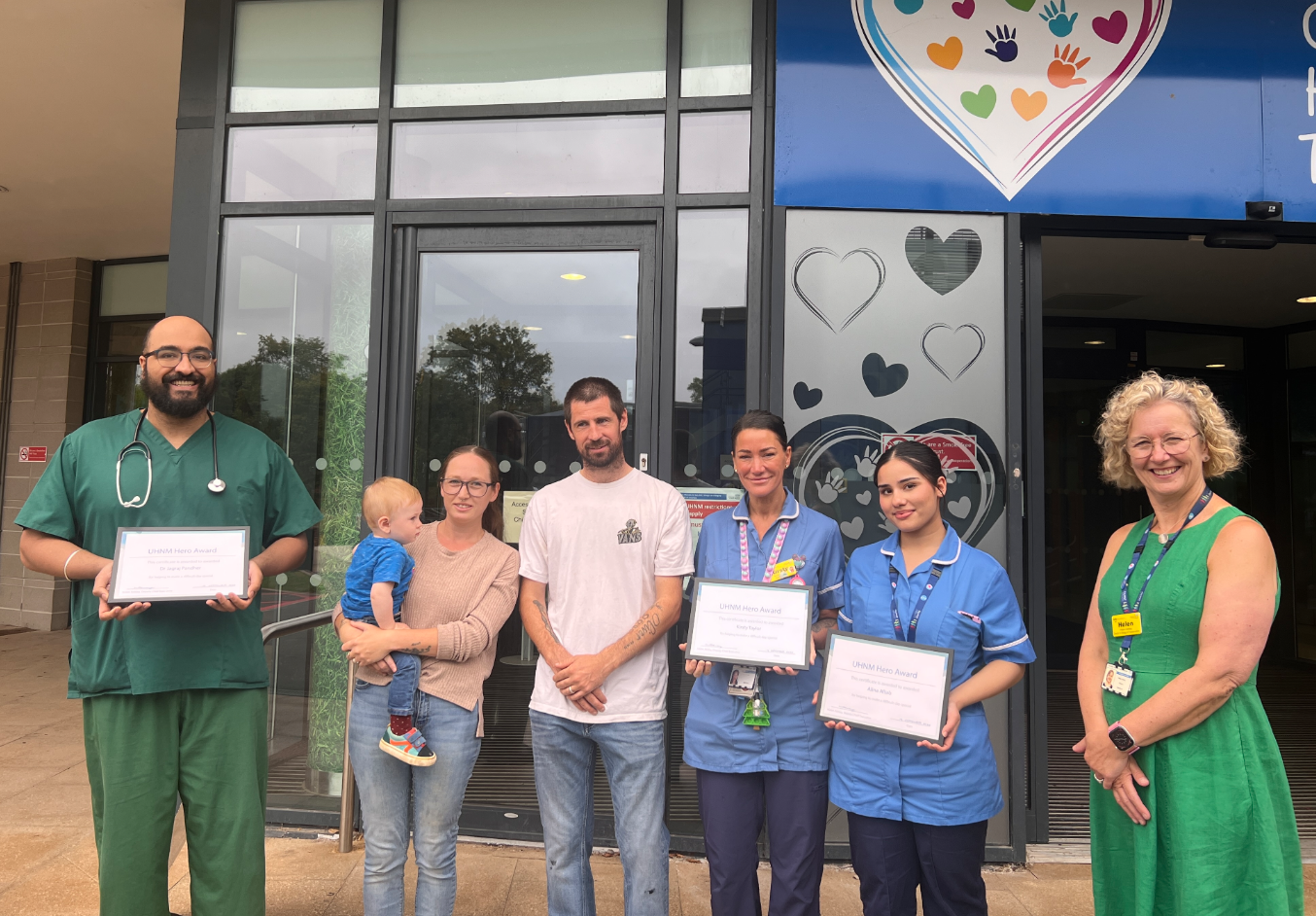
Staff in the Children’s Emergency Department at University Hospitals of North Midlands NHS Trust have been recognised for helping make a little boy’s first birthday special while he was being treated in hospital.
The team at the Royal Stoke University Hospital were presented with a UHNM Hero Award after taking time to celebrate one-year-old Otis Reynolds’ birthday when he was brought to the department after becoming unwell.
They’ve now been nominated in the NHS Hero category of the Your Heroes Awards.
While caring for Otis, resident doctor Dr Jagraj Pandher and staff nurses Kirsty Taylor and Alina Aftab celebrated his birthday with a homemade card and small gift.
Mum Clare and Dad Aaron, from Abbey Hulton, nominated the team to thank them for “turning a difficult time into a treasured memory”.
Clare Reynolds, aged 29, said: “Otis was ill on his first birthday and we had to bring him to A&E but the nurses and doctors made such an effort to celebrate despite the circumstances.
“It was a completely welcomed surprise. It made us feel that Otis wasn’t just a patient rather he was a little boy having an important day and they wanted to make it special for him.”
Dr Jagraj Pandher said: “It feels really special to receive this award. You don’t often hear what happens after patients leave hospital, so it’s lovely to know something we did made such a difference to the family.”
Staff nurse Alina Aftab said: ‘The best thing about working in children’s care is that we don’t just treat the child we treat also the parents’ concerns and reassure them, and I think acknowledging the smaller things makes a huge difference.”
Staff nurse Kirsty Taylor said: “You never expect anything like this. We were just doing our jobs, but it’s really nice to know that something that felt small to us meant so much to someone else.”
Clare added: “I wanted to say thank you for turning what should have been a dreadful time into a special one. It’s something we will remember for the rest of our lives and something Otis will hear about when he’s older.”
Helen Ashley, Deputy Chief Executive of UHNM, said: “The care, compassion and thoughtfulness shown to Otis and his family turned what could have been a difficult day into a treasured memory.”
Rebecca Ferneyhough
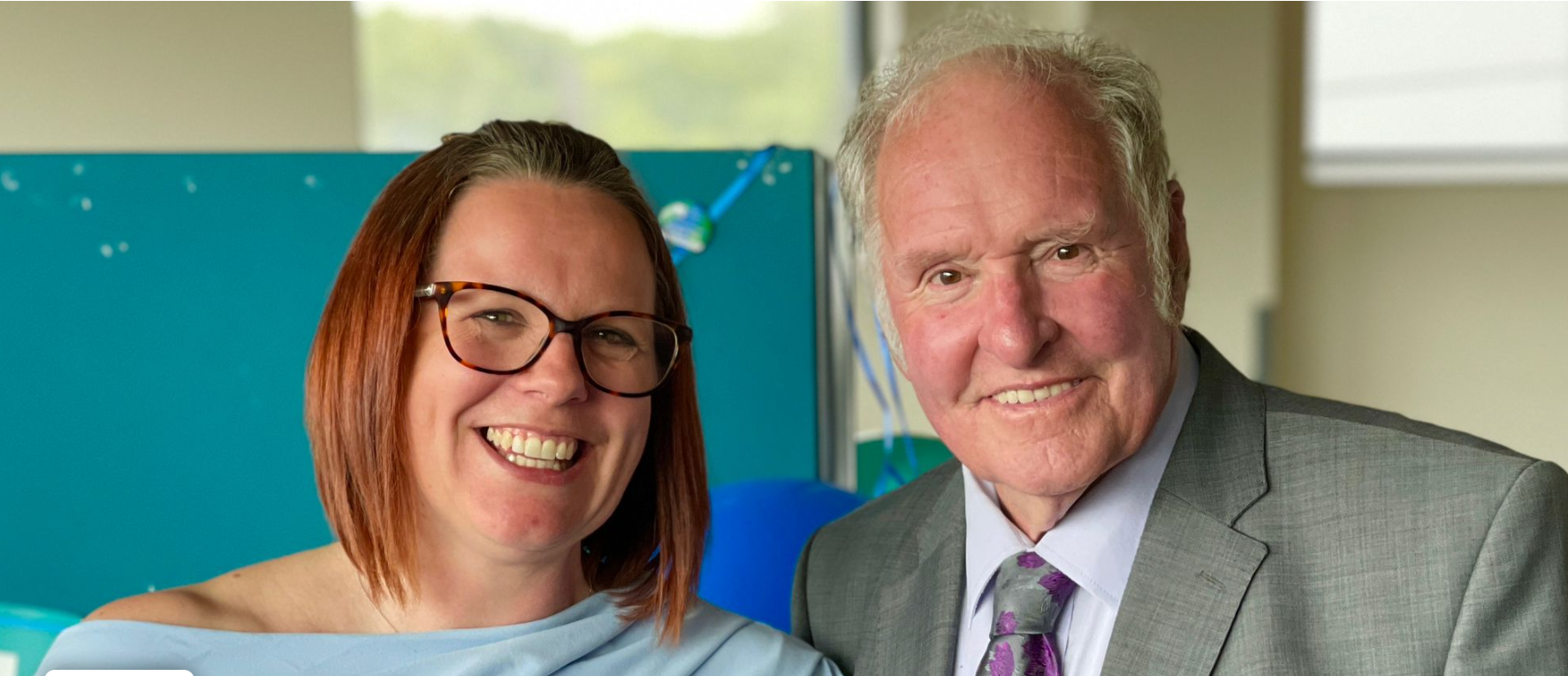
Nurse Rebecca Ferneyhough was off duty and in a chip shop when she saved the life of a great-grandad who had a cardiac arrest.
Rebecca, Professional Lead for Quality/Operations at UHNM, performed CPR on 82-year-old Graham Scott after he suffered a cardiac arrest while queuing in a fish and chip shop in Newcastle-under-Lyme.
Graham, a great-grandfather of eight, made a full recovery and has since returned to his role as a lollipop man at Hempstalls Primary School, a job he has done for the past 25 years.
He said: “Becky is such a special lady to me and my family. Thanks to Becky I am back on my feet and being back at work gives me a purpose again.
“I feel wonderful, the children are my medicine and it brings me so much joy to see them every day. Becky is fantastic and someone I will never forget.”
Rebecca has been presented with a DAISY Award by UHNM and has now been nominated in the NHS Hero category of The Your Heroes Awards.
Ann-Marie Riley, Chief Nurse at UHNM, said: “What Becky did that day is nothing short of extraordinary.”
Fiona Hibberts, UHNM Deputy Chief Nurse, added: “Becky is an outstanding nurse, committed to delivering safe patient care across our hospitals over many years. Although she was off duty she responded instinctively and her actions saved a life. She demonstrated the very best of our profession, living our Trust values both in and out of work.”
Rebecca said: “It is such a privilege to receive the DAISY award and see Graham again. He’s an amazing man and to see him back doing what he loves is really special.
“A miracle happened that day, I happened to be in the right place at the right time and even though it was daunting to give CPR in public you have to be brave and confident and I would encourage everyone to learn how to do CPR.”
The Staffordshire Thrombosis and Anticoagulation Centre
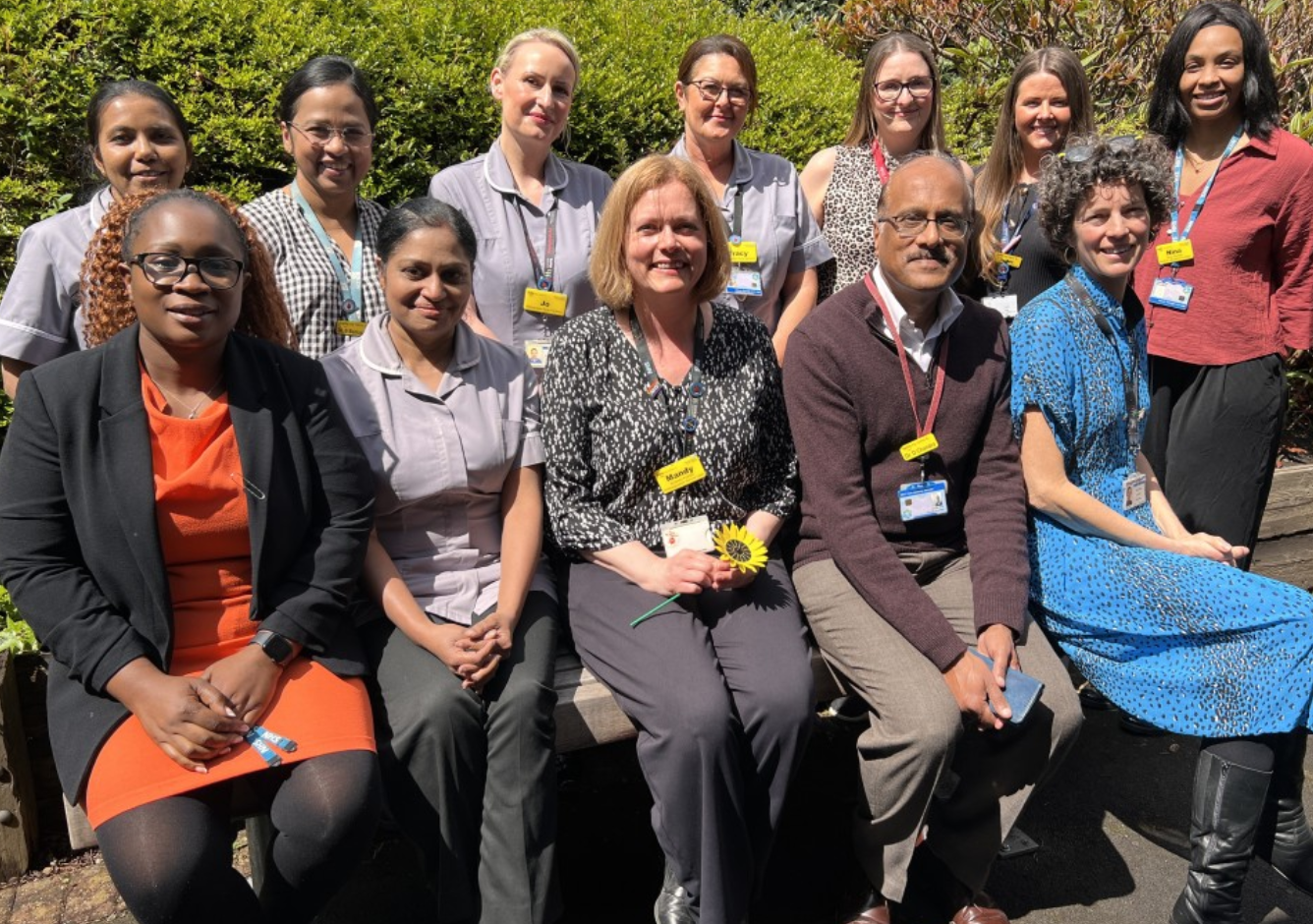
The Staffordshire Thrombosis and Anticoagulation Centre was created to make it easier for patients across Stoke-on-Trent and Staffordshire to access blood-thinning medication.
As well as providing specialist hospital support at UHNM the team introduced community clinics and a same-day deep vein thrombosis diagnosis service, helping patients get treatment more quickly and closer to home.
The service supports more than 5,000 patients each week across 22 community locations and works with 11 GP centres alongside specialist inpatient and outpatient care.
Amanda Pointon, anticoagulation service manager, said: “Ten years ago, many patients who needed anticoagulation monitoring had to travel into hospital for regular blood tests and clinic appointments. Our vision was to create a service that was based at Royal Stoke but delivered out in the community.
“That meant patients could attend clinics closer to where they live rather than always travelling into hospital. For many people, that has made managing their treatment much easier.
“When we started, we were mainly supporting patients on warfarin, which needs careful monitoring. Over time newer medications have become available that don’t always need the same level of testing.
“We’ve adapted alongside those changes and developed a strong nurse-led service supported by a wider multidisciplinary team. Today that includes nurses, biomedical scientists, associate practitioners and administrative staff who all play an important role in supporting our patients.”
The service is clinically led by Consultant Haematologists Dr Deepak Chandra and Dr David Sutton who have supported the development of new specialist services including a Cancer Associated Thrombosis clinic for patients who develop blood clots linked to cancer.
The team has also introduced study days to support learning for clinicians involved in anticoagulation care.
Amanda said: “The service has faced a number of challenges, including continuing to support patients during the COVID-19 pandemic. Patients on warfarin still needed regular monitoring during COVID, so our teams had to adapt quickly. We carried out more home visits for patients who were isolating to make sure they could continue receiving safe care.
“I’m incredibly proud of the team and the way they always put patients first.”
Amanda paid tribute to former colleague Sharon Acton, who played an important role in developing the service.
She said: “Sharon was passionate about this service and very proud of what the team achieved. It’s important to recognise the contribution she made in helping build the service we have today.”
“We are very proud of what the team has achieved over the past ten years. The service has grown and adapted alongside changes in medicine, and we have always focused on doing what is safest and best for our patients.
“Our ambition now is to continue developing the service so more patients across the region can benefit from the same high-quality specialist care.
The Staffordshire Thrombosis and Anticoagulation Centre has been nominated in the NHS Hero category of the Your Heroes Awards.
Play Team
A mum whose young daughter spent 40 days in the care of the Royal Stoke University Hospital has thanked the team for their “impeccable holistic care”.
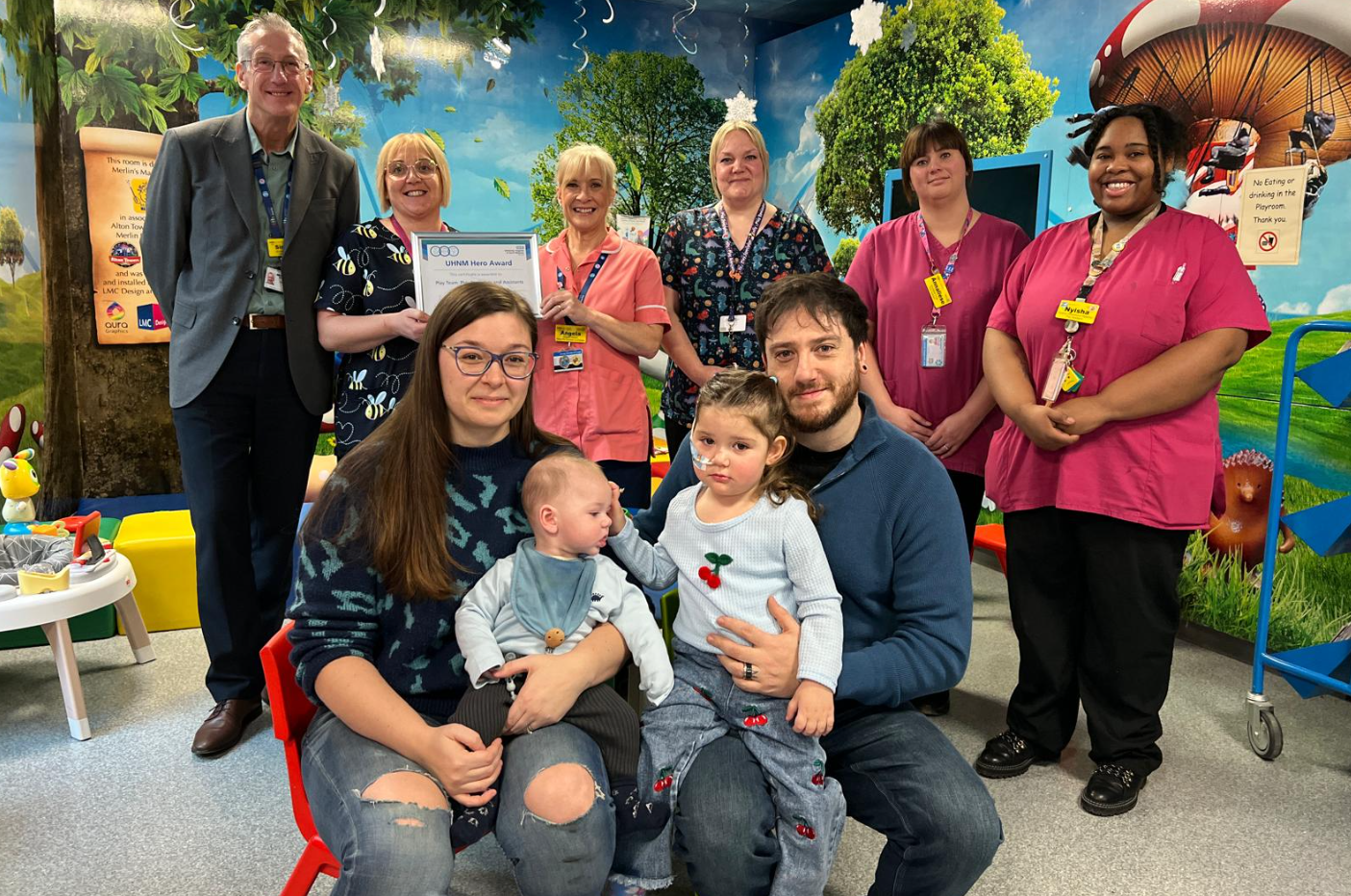
Maddie Meigh’s two-year-old daughter Robyn was admitted to Staffordshire Children’s Hospital at Royal Stoke for a series of tests for a degenerative neurological condition.
Maddie, from Newcastle-under-Lyme, was joined by Robyn, husband Dean, four-month-old son Oliver and Dr Simon Constable, chief executive, to present the Play Team with a UHNM Hero Award in recognition of their exceptional care and compassion shown during their hospital stay. The Play Team has now been nominated in the NHS Hero category of the Your Heroes Awards.
Maddie said: “During our stay, the play team provided impeccable holistic care not only to Robyn, but to myself too. They gained a beautiful bond with my daughter and treated her like royalty.
“They took her to play, walked her in her chair when her mobility was worse and created beautiful decorations for her room to make it feel less scary and more like a safe, happy space.
“They were also there for me as a mum. They listened to my worries, took time out of their day to check in on how I was coping and made sure we had everything we needed. I was also caring for my newborn son and very limited visitors, so their support made an overwhelming situation feel manageable.”
“Every member of the Play Team was amazing. You could see the positive culture in the way they worked together and in the genuine smiles on their faces. They supported Robyn during her most unwell moments, helped during procedures and always seemed to pull a bit of magic from their pockets to keep a smile on her face when she was scared or distressed
“They also built such a close bond with both Robyn and myself, always knowing how to make us laugh, even during the darkest moments, they truly are angels in disguise.”
Emma Biddulph, HPS co-ordinator, said: “I’m incredibly proud of the whole play team. They show care, compassion and creativity every single day, often in very challenging circumstances. Supporting children and their families through difficult moments is at the heart of what we do and it means so much to see that recognised by a family we have cared for.”
Dr Constable added: “I can’t begin to imagine what this family went through but I’m proud that our teams were able to support them through such a difficult time. It was lovely to meet the family and to see first-hand the impact our staff have.”
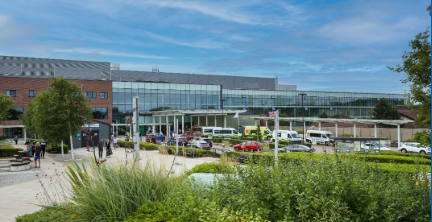
Ward 124 (renal) at Royal Stoke University Hospital
A patient with a rare kidney autoimmune condition is so grateful for the treatment she received at the Royal Stoke University Hospital that she’s nominated the entire renal team in the NHS Hero category of the Your Heroes awards.
The team, based on ward 124, took care of her as an inpatient for two weeks and are now just a telephone call away whenever they’re needed.
The patient said: “I would like to nominate the phenomenal team on ward 124 including all the renal consultants, doctors, nurses and support staff. I didn’t know I was ill until a routine blood test showed that I had a kidney injury. The whole renal team were amazing as I was in shock as I felt fine.
“I spent two weeks on the ward where they looked after me, managed to stabilise my condition and find out through a kidney biopsy what was wrong with me. Admittedly I wasn’t the best patient, I was terrified of the unknown and Dr Tabbinor my consultant along with everyone else in the renal team reassured me and kept me informed every step of the way.
“It all happened so suddenly and I am so grateful to be under the care of such an amazing, incredible and dedicated Team. They all go above and beyond my expectations.
“I have been diagnosed with the rare kidney autoimmune condition C3GN and Dr Tabbinor and the renal team are just a call away which is reassuring as it has allowed me to return to work and continue with my life albeit on treatment. Thank you to everyone on ward 124. You truly are amazing.”
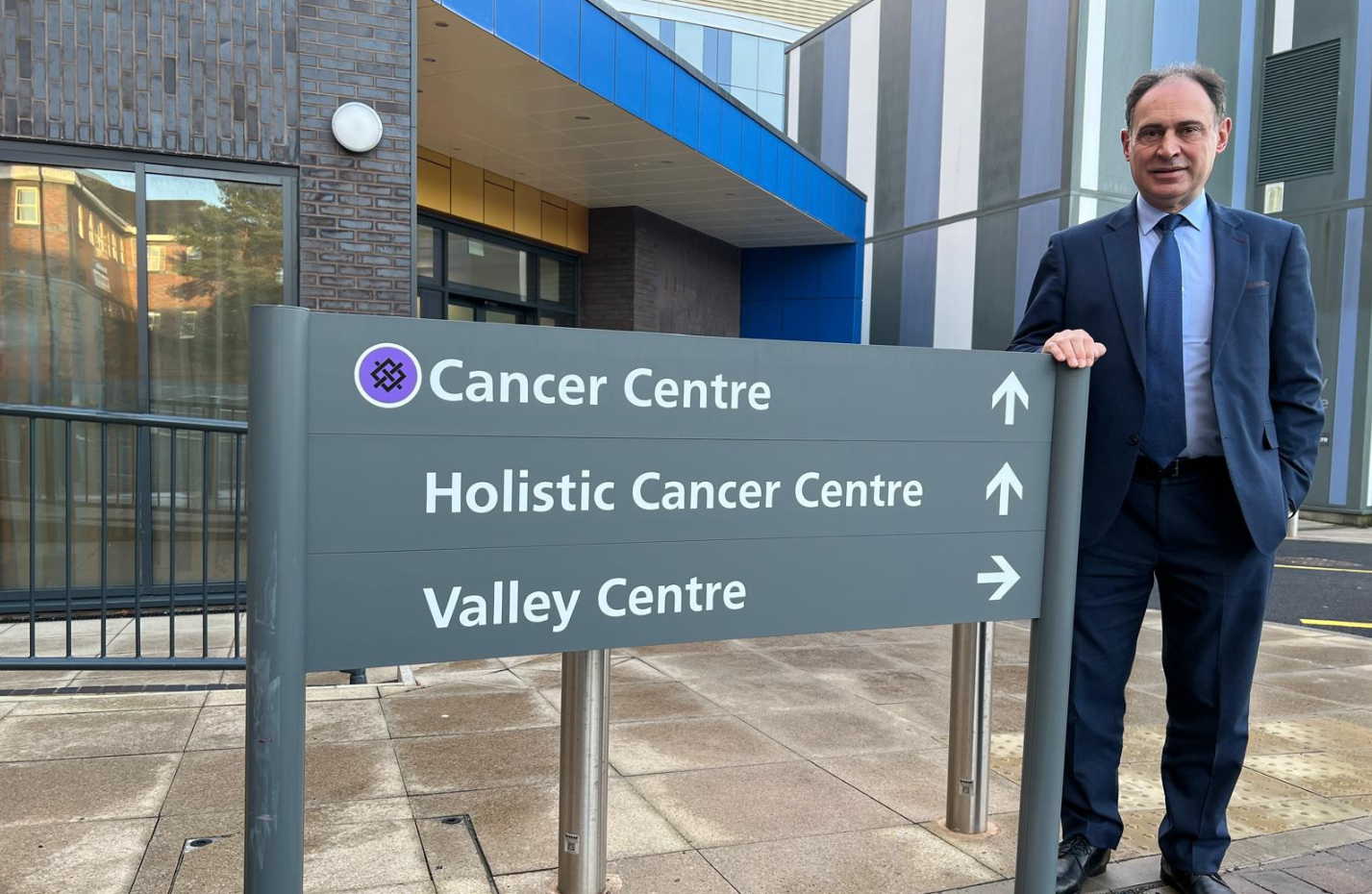
Professor Josep Sulé-Suso and team
Researchers at UHNM have developed a pioneering blood test that could change the way cancer is detected and monitored.
The study, published in Applied Spectroscopy and developed in partnership with Keele University, Loughborough University and other UK partners shows for the first time that a new technique called Fourier Transform Infrared microspectroscopy can find even a single cancer cell in a patient’s blood.
The cancer cells known as circulating tumour cells can break away from a tumour and travel in the bloodstream giving important clues about how the disease is progressing and how well treatment is working. These are the cancer cells that could lead to cancer spreading.
Current methods to detect these cells are complicated, expensive, time-consuming and can sometimes miss cancer cells if they change their characteristics whilst in the bloodstream in the body.
The UHNM research team’s new method is simpler, cheaper and uses standard glass slides already found in pathology labs making it easier to use adopt in everyday clinical practice.
The team successfully tested the new method using a blood sample from a 77 year-old lung cancer patient at UHNM.
Using advanced scanning technology and computer analysis, researchers were able to pinpoint a single cancer cell among thousands of healthy blood cells with the result independently confirmed by specialist testing.
Professor Josep Sulé-Suso, associate specialist in oncology at UHNM and lead author of the study, said: “This breakthrough could allow doctors to monitor cancer in real time using a simple blood test.
“Our team was able to detect a single lung cancer cell in a patient’s blood by combining advanced infrared scanning technology with computer analysis, focusing on the unique chemical fingerprint of cancer cells. It works using an infrared beam similar to one found in a TV remote control, but more powerful.
“This approach has the potential to help patients receive earlier diagnoses, personalised treatments, and fewer invasive procedures, and it could eventually be applied to many types of cancer beyond lung cancer. ”
The team will now evaluate this approach in larger patient groups, with the aim of developing a rapid, automated blood test that could be integrated into NHS cancer care pathways.
The project was supported by UHNM Charity and the North Staffordshire Medical Institute, with additional support backing from Keele University and Loughborough University and international research facilities.
Lisa Thomson, director of UHNM Charity, said: “By investing in research, new technologies and innovative approaches to care, UHNM Charity is giving our clinicians the tools and opportunities to deliver better treatments and faster diagnoses today while driving the breakthroughs that will shape the future of healthcare for our patients.”
Professor Josep Sulé-Suso and his team have been nominated in the NHS Hero category of the Your Heroes Awards.
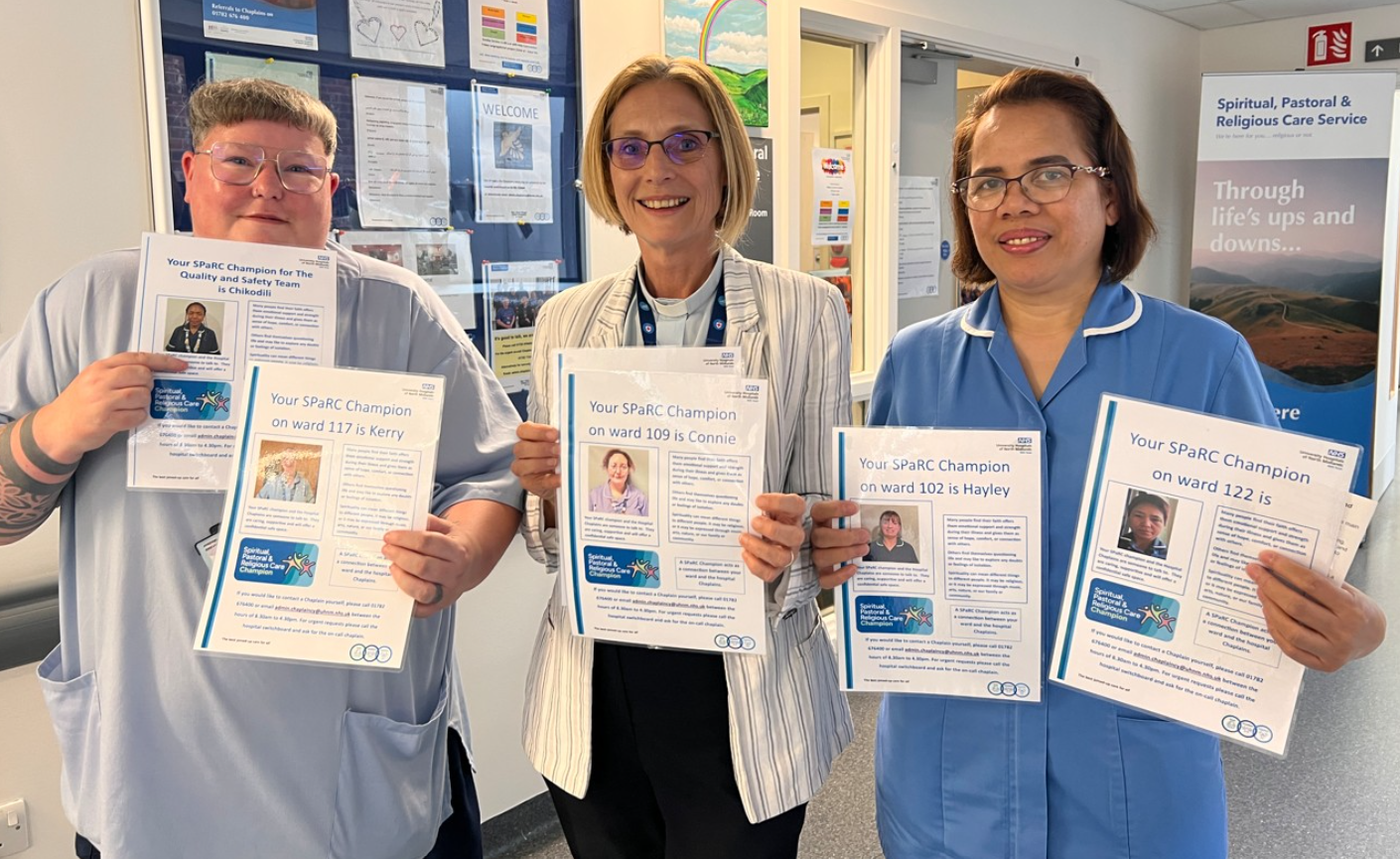
The Spiritual, Pastoral and Religious Care Champion initiative
A pioneering programme at University Hospitals of North Midlands NHS Trust is helping to ensure patients’ spiritual, pastoral and emotional needs are recognised alongside their physical care.
The Spiritual, Pastoral and Religious Care (SPaRC) Champion initiative has been shortlisted in the Emerging Good Practice category at the 2026 Picker Patient Experience Network (PEN) Awards and has now been nominated in the NHS Hero category of the Your Heroes Awards.
More than 20 SPaRC Champions are now working across UHNM acting as a link between clinical teams and the Trust’s Chaplaincy Service.
The programme was developed in response to feedback from patients, carers and staff which highlighted that spiritual care was not routinely included in patients’ care plans.
Rev Chris Wright, Head of Chaplaincy at UHNM, said: “This is fantastic recognition of the dedication and compassion shown by our SPaRC Champions and everyone supporting the programme.
“We know from patients and carers how important spiritual support can be, but not everyone is aware this support is available during their hospital stay.
“The Champions have become a bridge between clinical teams and Chaplaincy, helping staff from across UHNM feel more confident having conversations with patients, understanding what matters to them and making sure the right support is available when it is needed.”
Champions receive dedicated training and support and have introduced a number of practical improvements including prompts to identify spiritual needs during admission, increased referrals to Chaplaincy and ward-based awareness campaigns.
Victoria Winsor, Discharge Facilitator on the Acute Medical Unit at Royal Stoke and a SPaRC Champion, said: “The programme has helped open up conversations about caring for the whole person, not just treating a physical condition.
“Sometimes simply asking a patient about their emotional or spiritual wellbeing gives them the chance to talk about something that is really worrying them and helps us make sure they get the right support.
“Seeing the positive difference that support can make is the best part of being a Champion.”
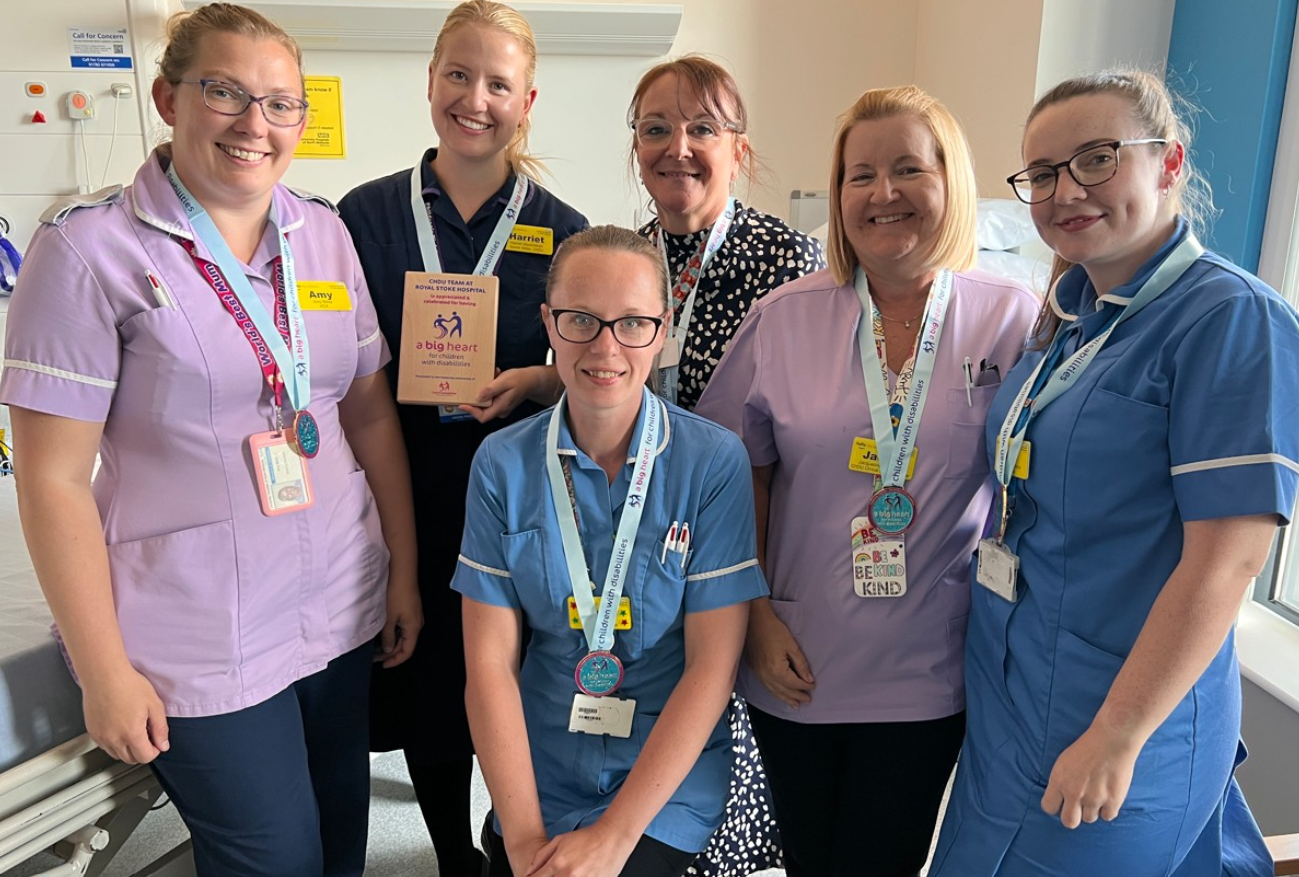
Children’s High Dependency Unit
The Children’s High Dependency Unit at Staffordshire Children’s Hospital at Royal Stoke has received a national award after being nominated by the family of two children with complex medical needs.
The team was presented with a Big Heart Award by Fostering Together, a national organisation supporting foster carers of children with disabilities and complex medical needs. The team has also now been nominated in the NHS Hero category of the Your Heroes Awards
The medical and nursing team from Children’s HDU and staff from UHNM’s Respiratory team were nominated after supporting the family and their two foster children over the past eight years.
The family described staff as being “always available for expert advice and support, offering clear explanations, calm reassurance and rapid responses whenever we need them”.
In their nomination, they wrote: “As a family who fosters medically complex children, we depend on this team for expert care and support.
“Beyond technical excellence, the team’s warmth and humanity are defining features of our experience. During extended stays, they make the ward feel as relaxed as possible. Staff use humour and kindness to lift spirits, and small gestures from stopping to say hello to every child to sharing amusing pictures of pets create moments of joy that help us through difficult times.”
HDU cares for babies, children and young people who need closer monitoring and specialist treatment than can be provided on a general children’s ward.
Harriet Mackintosh, HDU ward manager, said: “Receiving this award means so much because it has come directly from a family we’ve had the privilege of caring for over many years. Building those relationships based on trust is such an important part of what we do, so to know they felt supported enough to nominate us is incredibly special.
“This recognition belongs to every member of the team. It reflects years of working together to provide expert care while also making children and their families feel safe, supported and cared for. We’re proud of the clinical care we provide, but we’re equally proud that the family recognised the small acts of kindness that can make such a difference during difficult times.”
Teresa Wilson, matron for children’s and professional nurse advocate at UHNM, said: “Being nominated by a family is probably the greatest compliment we could receive because it tells us we’ve genuinely made a difference to their lives.
“I’m incredibly proud of every member of the team, they provide outstanding care every single day, but they also build relationships with families that help them feel confident, supported and able to cope through some incredibly challenging circumstances. This award is thoroughly deserved and recognises the compassion, professionalism and dedication they show every day.”
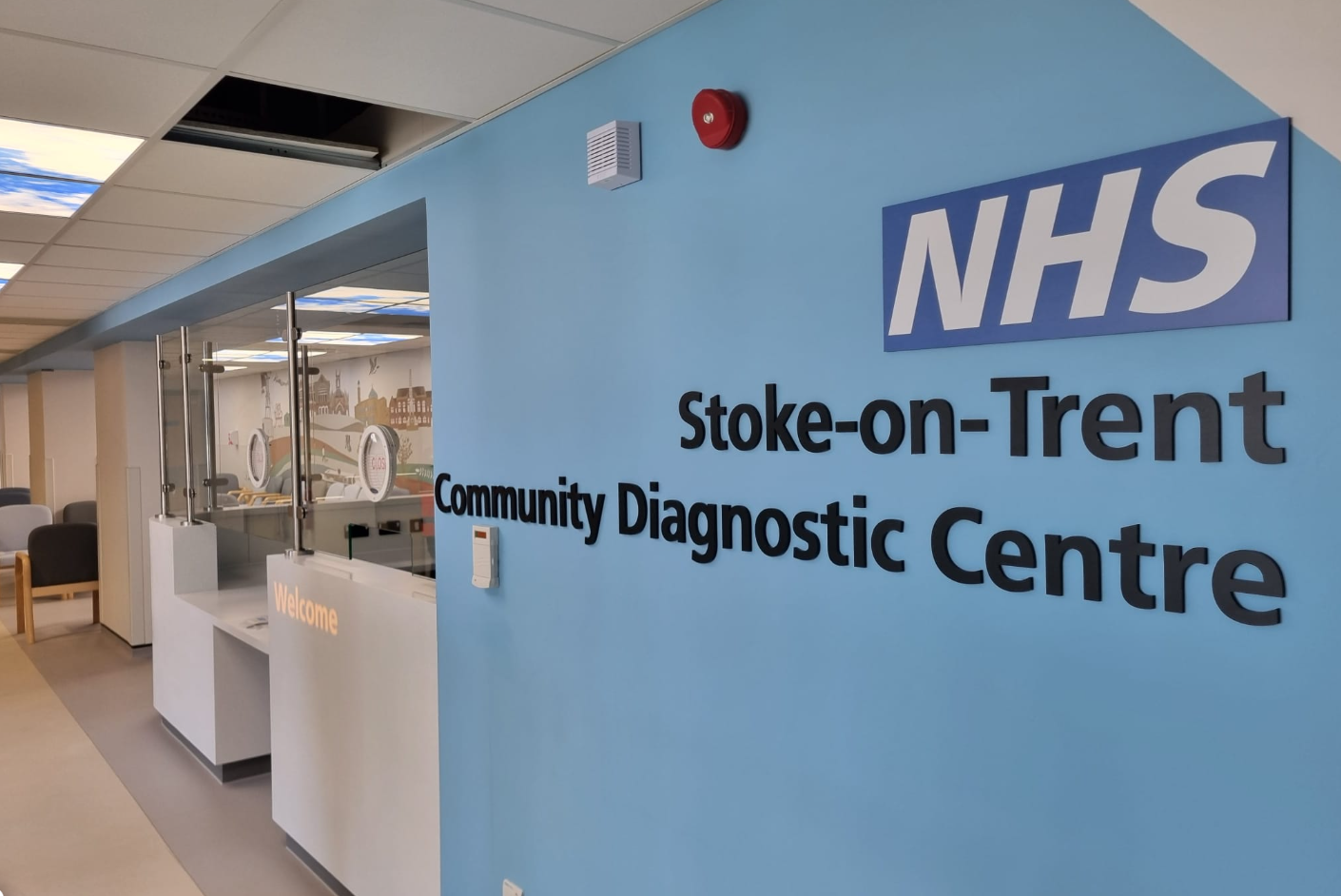
Stoke-on-Trent Community Diagnostic Centre
The Stoke-on-Trent Community Diagnostic Centre has been recognised for the positive difference it is making to local people and communities.
The Hanley-based facility was Highly Commended in the Community Benefit category at the RICS Awards 2026 (West Midlands) and has now been nominated in the NHS Hero category of the Your Heroes Awards.
Launched in May, the CDC is expected to provide around 180,000 additional tests and scans every year for people across Stoke-on-Trent, North Staffordshire and surrounding areas.
It was delivered through a partnership between UHNM and Wesleyan Assurance Society and forms part of a national NHS programme to improve access to diagnostic tests, reduce waiting times and support earlier diagnosis.
Local residents, community representatives and people with lived experience were involved in the design, accessibility and overall environment, helping to ensure it reflects the needs of the people who use it.
During its construction UHNM also held careers events, school visits, training opportunities and work experience placements for local young people.
Simon Wilmore, senior capital project manager at UHNM, said: “I’m incredibly proud of everyone involved in delivering the CDC. This project was delivered against a challenging programme yet the team consistently demonstrated professionalism, clear communication and a strong commitment to quality.
“Their collaborative approach ensured the scheme remained on track and aligned with the Trust’s ambition to expand diagnostic capacity and improve patient access.”
Dr Ann-Marie Morris, Deputy Medical Director at UHNM, said: “This is a fantastic, purpose-built facility with state-of-the-art equipment that will provide an excellent environment for both patients and staff.
“Being based in the centre of Hanley means the service will be accessible, welcoming and much closer to where people live and work, which will make a real difference to the patient experience.”